Auckland diesel has surged 70% in a single month — here's exactly what New Zealand truck drivers can do right now to cut fuel costs and protect their income.
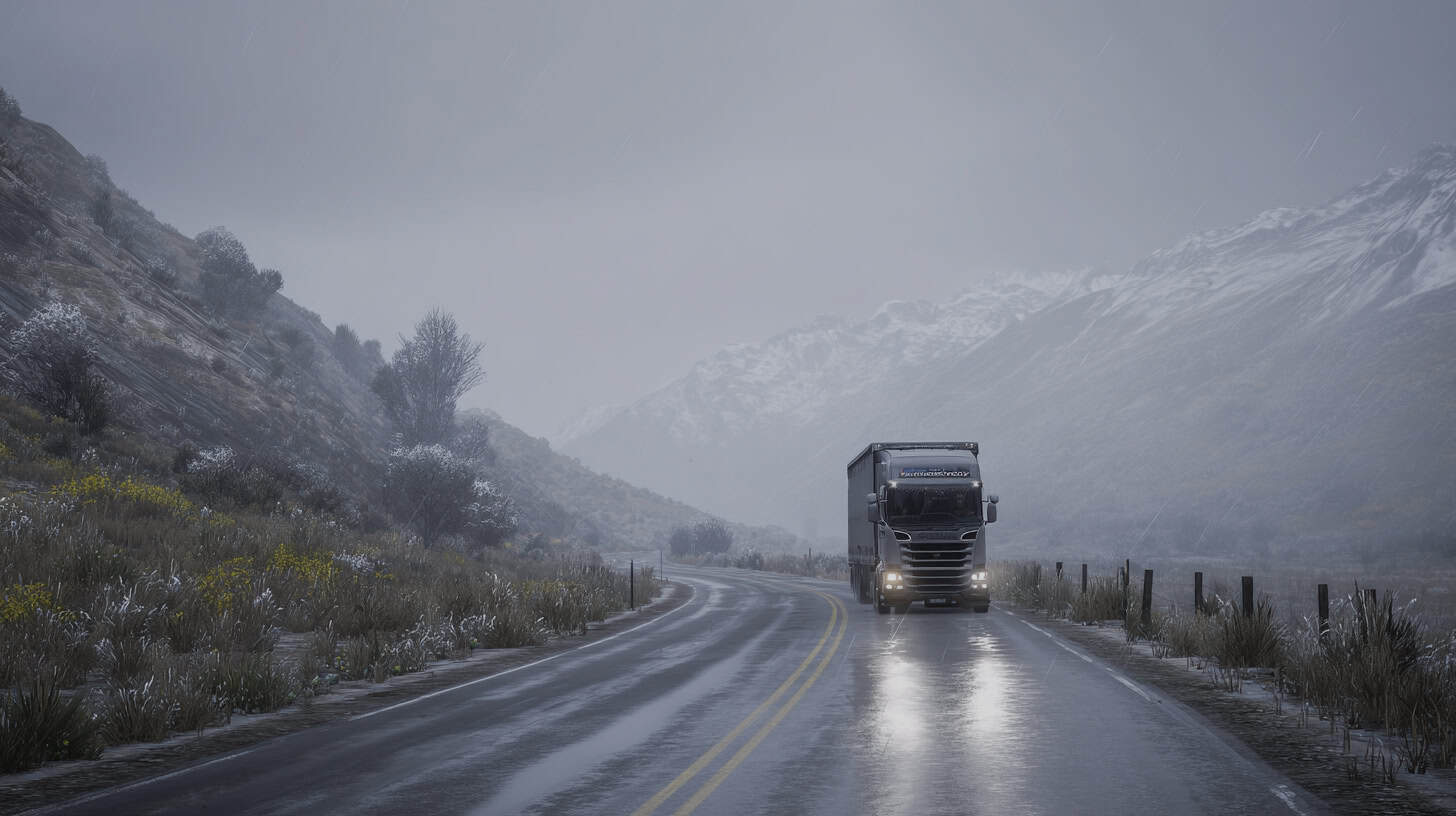
New Zealand asks a lot of its trucks.
The same vehicle might start a Monday navigating Auckland's stop-start motorway network, run a mid-week load through the Bombay Hills in the rain, and finish the week crossing the Desert Road in a frost with a wind chill the forecast didn't account for.
We don't have one climate. We have several — sometimes in the same trip.
North Island winters are defined less by snow than by persistent heavy rain, morning fog across the Waikato and Taranaki, and the particular hazard of black ice on elevated routes like the Desert Road and the Napier–Taupo highway. There are also the slippery roads that follow a dry spell, when oil residue on the surface combines with the first rain to create conditions more treacherous than most drivers expect.
For fleet operators, this is the context for everything that follows.
The ideal time for a pre-winter service is late May, before the wet season is fully established — not after the first breakdown. This checklist covers the systems that actually fail in New Zealand winter conditions, based on more than 20 years of international heavy vehicle experience.
In wet conditions, stopping distances double. On ice, they can increase tenfold. For a loaded truck, that margin is not theoretical — it is the difference between a near miss and something far worse.
The braking system deserves the most attention of anything on this list. A workshop pre-winter inspection should cover brake lining thickness and condition, air hose integrity, and moisture in the compressed air system. Water in the air lines can freeze in cold temperatures, causing brake fade at precisely the moment you need stopping power. Air tanks should be drained regularly through winter, with particular attention to the wet tank.
Slack adjusters and S-cams need proper lubrication to keep brakes in alignment; neglected adjusters cause uneven braking and longer stopping distances. Wheel bearings are worth checking too — worn bearings increase stopping distances and show up as uneven tyre wear, pulling under braking, or vibration on the highway.
If your vehicles have ABS, Waka Kotahi requires the system to be confirmed within manufacturer specifications at Certificate of Fitness (CoF) inspection. Don't wait for the CoF to find out it isn't.
Cold, wet roads reduce tyre grip significantly. Tread depth must meet CoF minimums, but Brake NZ recommends at least 3mm for safe wet-weather performance — a useful threshold to work to rather than waiting for the legal minimum.
Check condition across all positions, including the spare: sidewall cracking is easy to overlook in a busy workshop and becomes a genuine risk at highway speed on a wet road. Tyre pressure also drops in cold temperatures, so check pressures against the manufacturer's specification for the load being carried.
For vehicles that run the Desert Road, the Remutaka Hill, or any elevated route through the central North Island, snow chains are not optional. They should be on board, in serviceable condition, and the driver should have fitted them at least once before — not worked it out for the first time in the dark on the side of the road.
Battery capacity drops meaningfully in cold temperatures. A battery that starts a truck reliably in February may not do the same job in July.
The key is load testing, not just voltage. A battery can read a healthy resting voltage and still fail under the demand of a cold start. For vehicles with high idle or stop-start duty cycles — think urban Auckland runs — you need high Cold Cranking Amps. Highway trucks running inverters need high reserve capacity. They are different requirements; the battery type should match the duty cycle.
Check alternator and starter output, inspect wiring for exposed or chafed insulation (which becomes brittle in cold conditions), and clean terminals and apply dielectric grease to all connections. For vehicles towing trailers, the trailer pigtail is worth a specific check — faults there cause ABS and lighting violations at CoF.
Increased electrical load in winter — lights running longer, demisting systems working harder, heated mirrors — puts more demand on ageing systems. It is better to find a marginal battery in the workshop than on a cold morning with a run to make.
Standard diesel can thicken and gel in cold temperatures, clogging fuel filters and lines. For most Auckland-based urban fleets this is a lower risk, but vehicles regularly running the Desert Road or elevated central North Island routes should be using winterised diesel or anti-gel additives before June.
Replace fuel filters before winter and keep a spare in the cab. Keep tanks above half-full through the cold months — low tanks allow condensation to form inside, introducing moisture into the fuel system.
It sounds like a summer concern. It isn't.
Cold starts, long warm-up cycles, and the slow deterioration of hoses and seals over time all contribute to cooling system failures in winter — and a failure on the Napier–Taupo highway in July is a significantly worse situation than one in a South Auckland industrial area in January.
A workshop service should flush and pressure-test the radiator, inspect upper and lower hoses for cracking or soft spots, and verify coolant concentration. For most New Zealand conditions, protection to -15°C is adequate; for vehicles regularly running in elevated areas, go lower. Brake fluid is worth checking too — moisture contamination reduces braking performance in cold conditions, and a fluid flush is inexpensive relative to what it protects.
Cold starts place maximum stress on transmissions, differentials, and transfer cases. Fluid viscosity drops in cold temperatures, clearances tighten, and anything that was marginal through the warmer months tends to become a problem when winter arrives.
Check fluid levels and condition across all drivetrain components. Look for leaks, particularly around seals and gaskets that may have been weeping slowly for some time. Listen carefully: a whine, a shudder on engagement, or a hesitation that wasn't there in autumn is worth investigating before it becomes a rebuild.
Transmission repairs are not small jobs. Catching a developing problem early is the difference between a fluid change and several days off the road.
Wet roads amplify the effects of worn steering geometry. Suspension bushes, steering components, king pins, and skid plates are all worth inspecting before winter — Waka Kotahi's technical bulletins for heavy vehicles specifically flag king pins and skid plates for pre-season attention.
Grease all pivot and suspension points. Cold, wet conditions accelerate corrosion and wear on unlubricated joints, and the cost of a grease nipple is considerably less than a worn-out bush or joint.
Check all exterior lighting while you are at it: headlights, indicators, brake lights, reverse lights, and marker lights. CoF requires all lighting to be fully functional; winter driving requires it in practice too.
Worn wiper blades are legally and practically dangerous in North Island winter rain, and they are one of the easiest things to overlook during a pre-season check.
Confirm that front and rear demisting systems are working. Foggy cab windows are a serious hazard for truck drivers managing large blind spots in low-visibility conditions. Top up windscreen washer fluid with a winter-grade formulation that won't freeze in the reservoir or lines.
Equipment is only part of the picture.
Waka Kotahi's highway information line (0800 44 44 49) and highwayinfo.govt.nz provide real-time road conditions and closures — useful for planning any run that crosses elevated or rural routes in winter. Drivers should check these before heading out on at-risk routes, allow extra time, and avoid rural back roads after heavy rainfall where slips and washouts are a genuine possibility.
Commercial drivers are legally required to maintain vehicles in CoF condition at all times, not just at inspection. That obligation sits with the operator as much as the mechanic.
Winter driving demands higher concentration. Fatigue in reduced-visibility conditions is more dangerous, and the margins are smaller. A short conversation with your drivers before the season starts costs nothing.
Van & Truck Repairs brings over 20 years of international heavy vehicle experience to our South Auckland workshop. We handle fleet servicing, pre-COF inspections, transmission rebuilds, and advanced diagnostics.
If you'd like us to go through your vehicles before winter sets in, get in touch now. Late May is the right time — before the weather makes the decision for you.
📞 09 600 1565
🌐 akltrucktrans.co.nz
Van & Truck Repairs | South Auckland | MTA approved
Auckland diesel has surged 70% in a single month — here's exactly what New Zealand truck drivers can do right now to cut fuel costs and protect their income.
A blocked DPF quietly costs you in fuel, power loss, and premature replacement — here's what you need to know to stay ahead of it.
VTR's new smoke-based leak detection system quickly finds hidden air leaks in turbo, intake & exhaust systems.
Why smart Auckland fleet managers service trucks in November. Prevent summer breakdowns, save 62% on downtime.
How NZ's new Freight Action Plan impacts your transport costs and fleet management. 5 strategies to boost freight productivity and navigate regulatory reforms.
Smart fleet managers use pre-COF inspections to avoid expensive failures. Learn how a $300-500 investment can save you thousands in emergency repairs.
Modern truck transmissions are more efficient but require smarter maintenance. Learn how today's gearboxes differ from older models, get practical tips to extend transmission life, and discover why regular servicing prevents costly breakdowns.
Managing a truck fleet in New Zealand has never been more challenging, with fleet managers from Auckland to Christchurch facing a perfect storm of critical driver shortages, complex regulatory requirements, and unpredictable maintenance costs that can devastate budgets overnight.